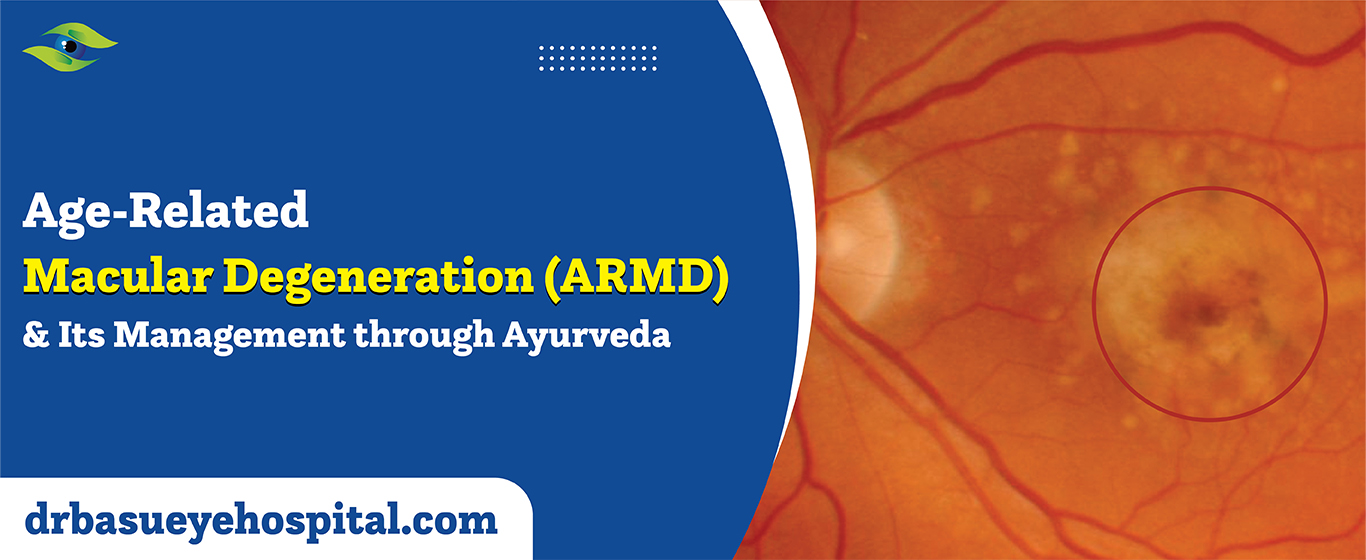
Age-related macular degeneration (ARMD) is a chronic eye disorder which impacts the macula, the central part of the retina responsible for sharp, detailed vision. While peripheral vision often remains unaffected, ARMD significantly impairs central vision, making everyday activities such as reading, driving, and recognizing faces a challenging task.
Because of the disorder, there may often be a reduced quality of life and, in many cases, emotional distress or depression. Modern research identifies ARMD as a leading cause of irreversible vision loss in older people. The disease mostly occurs due to genetic and environmental factors such as aging, smoking, and poor diet. Ayurveda, with its holistic approach, offers a deeper understanding of this disease through the lens of dosha imbalance, providing natural ways to manage it.
Ayurvedic Perspective on ARMD
In Ayurveda, ARMD is understood as a condition involving an imbalance of Vata and Pitta doshas, particularly affecting Alochakapitta, the sub-dosha of Pitta that governs visual perception and resides in the retina (macula).
- Vata dosha contributes to degeneration and nerve tissue damage, commonly seen in aging-related disorders.
- Pitta dosha, responsible for heat, metabolism, and vision, when vitiated, leads to inflammation and damage to the retinal tissues.
Thus, ARMD is primarily a Vata-Pitta disorder, characterized by degeneration (Vata) and inflammation (Pitta) in the macular region.
What are the Symptoms of Macular Degeneration?
The macula is a small part in the center of your eye that helps you see things clearly and send pictures to your brain. When the macula gets damaged, your eyes may still see the image, but your brain can’t understand it properly — so your vision becomes unclear.
At first, most people don’t notice any symptoms. But as the condition gets worse, you may start to experience:
- Difficulty seeing in dim light – It becomes harder to see clearly at night or in a dark room.
- Blurry vision – Things may look foggy or not as sharp as before.
- Colors look faded or dull – You may find it hard differentiate about the colors
- Low vision – You may have trouble doing daily tasks like reading, driving, or recognizing faces.
- Straight lines look wavy or bent – For example, the edge of a door or a window frame may look crooked. If this happens, see an eye doctor immediately.
- Dark or blank spots – You might notice empty or dark patches in the center of your vision.
Correlation with Ayurvedic Texts
The condition aligns closely with Pitta Vidagdha Drishti, a type of Drishtigata Roga described in Ayurvedic classics. In this condition, the vitiated Pitta — which is responsible for the visual function — aggravates and affects the macular portion of the retina (Drishti), leading to Vidagdhata (inflammation, ulceration, and degeneration of local tissue).
This causes symptoms that look similar to the eye disease called ARMD. In this problem, the Pitta dosha (the heat element in the body) becomes too high. So, the treatment focuses on cooling down the Pitta and bringing the body back into balance
Types of ARMD in Ayurvedic Context
Dry ARMD (Vata Predominant Type) is the most common form of age-related macular degeneration. In this condition, the Vata dosha — which controls movement and dryness in the body — becomes imbalanced. Because of this, the central part of the eye (macula) slowly starts to weaken, leading to gradual loss of vision over time. Tiny waste deposits called drusen build up under the retina, making it harder for the eye to see clearly. This type of ARMD progresses slowly and quietly, without any swelling or active inflammation in the eye.
Wet ARMD (Pitta-Rakta Predominant Type)
Wet ARMD is a type of eye disorder in which extra blood vessels grow under the eye and leak fluid, leading to blurred or dark spots in the centre of vision. It usually develops from the dry type of ARMD and can progress quickly; therefore, early treatment is crucial to protect remaining vision.
- Involves aggravated Pitta and Rakta (blood).
- Leads to rapid vision loss due to abnormal blood vessel growth, fluid leakage, or bleeding beneath the retina.
- associated with acute inflammatory and vascular changes.
Ayurvedic Treatment of Macular Degeneration
The goal of Ayurvedic management of macular degeneration is not a complete cure, but to:
- Slow disease progression
- Preserve your existing vision
- Improve functional capacity of the eyes
This is achieved through a holistic approach combining:
- 1.Local eye therapies (Kriyakalpas) – Procedures like Netra Tarpana, Aschyotana, and Nasya help nourish and rejuvenate eye tissues.
- Systemic detoxification (Panchakarma) – It helps to release toxins, balance doshas, and improve overall body health.
- Internal medications – Customized herbal formulations aimed at placating Vata and Pitta and strengthening visual function.
- Diet and lifestyle modifications – To stop additional doshic imbalance and support retinal health.
All treatments should be carried out under the charge of a qualified Ayurvedic ophthalmologist, who can tailor therapy based on the individual’s constitution (Prakriti) and disease stage.
Lifestyle and Diet for Healthy Eyes
Ayurveda states that the food we consume and our daily habits plays an important role in supporting good eye health. Moreover, it’s vital to incorporate foods that are beneficial for your eyes in your diet.
These include green leafy vegetables, carrots, sweet potatoes, berries, nuts, and fish. Such foods are rich in vitamins A, C, and E, as well as healthy nutrients like omega three fatty acids , which help protect your eyes. You can also use a little ghee or healthy oils in your food to keep your eyes strong.
Try to avoid overeating spicy, salty, sour, or deep-fried food, as these can harm your eyes. Make sure you have stopped smoking and drinking alcohol, because they make eye problems worse.
Keeping Vata in Balance
Age-related macular degeneration (ARMD) occurs when the Vata dosha is excessively high and experts suggest consuming warm, freshly cooked food like soups, khichdi, and porridge. Avoid cold or raw foods. Add healthy fats like ghee, sesame oil, or olive oil, and use spices such as ginger, cumin, cinnamon, cardamom, turmeric, and hing in your cooking. Instead of cold drinks you can drink warm water or herbal tea.
You should also follow a habit — eat and sleep at the same time every day. Get 7 to 8 hours of sound sleep every night. Avoid working too much or staying up late. A gentle self-massage with warm sesame or almond oil helps you relax and improves blood flow. Light exercises, such as yoga or walking, are beneficial for you. Doing meditation or deep breathing (pranayama) helps calm the mind and reduce stress.
Helpful Herbs
Some natural herbs can also be beneficial when used under the guidance of an Ayurvedic doctor. Ashwagandha helps you relax and sleep better. Brahmi helps improve memory and focus. Triphala aids digestion and helps maintain your body’s cleanliness. Ginger aids in keeping your body warm and aids digestion.
Eye Care Tips
To keep your eyes healthy, protect them from strong sunlight and dust. Take regular breaks from your mobile phone and computer. Practice eye yoga techniques such as palming (gently rubbing your hands over closed eyes) and Trataka (staring steadily at a single point or a candle flame). Make sure to get enough sleep, as rest helps your eyes heal and stay strong.
Conclusion
According to Ayurveda, Age-Related Macular Degeneration (ARMD) happens when there is an imbalance of Vata and Pitta doshas, which affects the part of the eye responsible for vision. Even though a complete cure may not always be possible, Ayurveda helps to slow down the disease, protect eyesight, and improve quality of life through natural food, healthy habits, and simple treatments. By following these tips, you can naturally care for your eyes and maintain strong vision for a long time.