
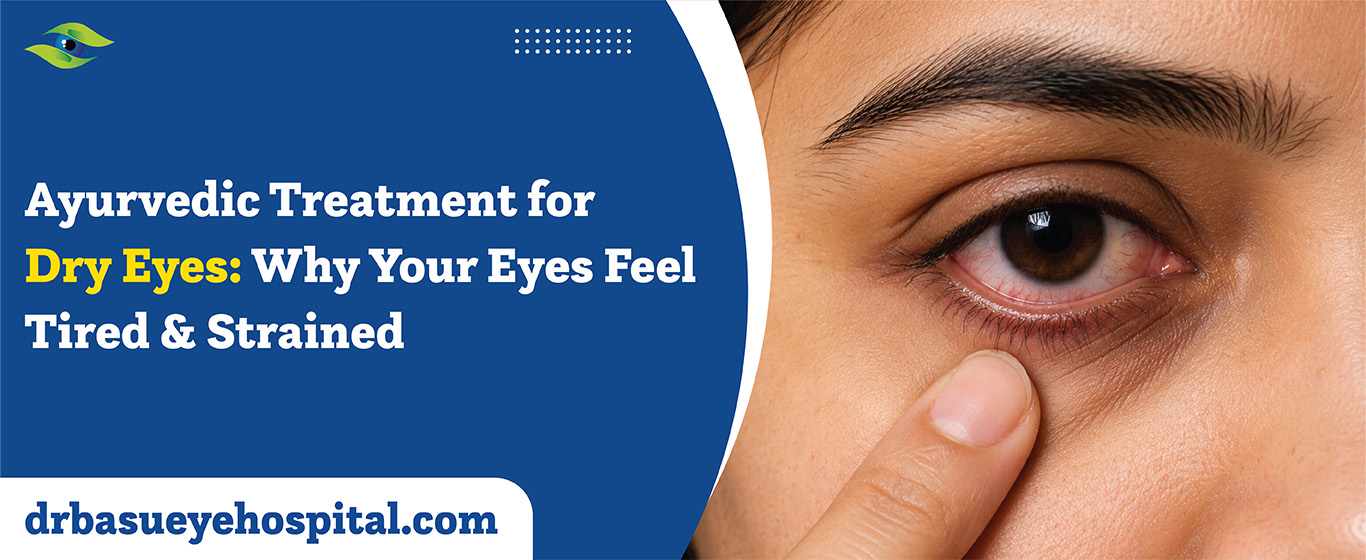
Tired eyes and eye strain have become an everyday concern in today’s screen-orientated lifestyle. If you’ve ever wondered why my eyes feel tired and strained, you’re not alone. From long hours on digital devices to poor sleep and environmental factors, there are multiple tired-eye causes and eye strain causes that affect people of all age groups. Many also experience dry eyes and eye strain together, leading to discomfort like irritation, heaviness, and blurred vision.
At Dr Basu Eye Care Centre, we’ve spent over 45 years listening to patients looking for dry eye treatment in Ayurveda. It is prevalent in every age group—from a 19-year-old college student pulling all-nighters over reels and assignments to a 45-year-old working professional staring at spreadsheets for nine hours a day to a 68-year-old grandmother who says her eyes “just don’t feel wet anymore”. Dry eye doesn’t discriminate by age. It simply shows up differently depending on what stage of life you’re in.
Why Does This Happen? It’s Different for Every Age
In the young (teens to late 20s): This age group is spending unusually long hours on screens studying, gaming, and scrolling. Here’s the part most people don’t realise: when we focus on a screen, we naturally blink far less often. A normal blink rate is around 15–20 times a minute, but screen focus can reduce the blinking rate to 5–7 times. Fewer blinks means the tear film that coats and protects your eye doesn’t get refreshed or spread evenly. The eye essentially starts to “dry out” in real time, even while you’re wide awake and staring right at it.
In working professionals (30s to 40s), add air-conditioned offices, long commutes, poor sleep, and the same screen habits, and dryness compounds with fatigue. Stress also plays a quiet role here — many patients notice their eyes feel driest during high-pressure weeks, which shares characteristics with how the body’s stress response can reduce tear quality.
In midlife and beyond (50+): As we age, the glands responsible for producing the oily layer of our tears — the layer that stops tears from evaporating too fast — naturally slow down. This is a big reason dryness becomes more common and more persistent with age, especially after menopause in women, when hormonal shifts further affect tear production.
Across every age, the underlying story is the same: the eye’s natural moisture and protective film are being disrupted faster than the body can replenish them, and hence, people are looking for natural treatment for dry eyes ayurveda.
The Ayurvedic Approach: Working With the Eye, Not Against It
Understanding the treatment for persistent dry eyes, especially tired eyes after screen time, is the first step toward managing eye fatigue and dryness. Ayurveda has always viewed the eyes as a delicate seat of “Pitta” – the body’s fire and metabolic energy. When Pitta gets aggravated through excessive screen light, heat, stress, or poor diet, the eyes are often the first to show it: redness, burning, dryness, and irritation.
The dry eye treatment in Ayurveda isn’t about masking the symptom — it focuses on the root causes of tired eyes and works to restore balance naturally. If you’re looking for how to relieve tired eyes naturally, Ayurveda offers time-tested therapies and daily practices that support long-term eye comfort. These approaches also include simple, effective natural remedies for eye strain that can be incorporated into your routine
Here are practices we often recommend to patients, which many find genuinely soothing:
1. The 20-20-20 Rule, With an Ayurvedic Twist
Every 20 minutes, look at something 20 feet away for 20 seconds — this alone encourages more natural blinking. We often suggest pairing this with a few slow, deliberate full blinks (not just quick flutters) to help spread the tear film evenly.
2. Triphala Eye Wash (Under Guidance)
Triphala, a blend of three fruits central to Ayurvedic medicine, is traditionally used in a diluted eye wash for general eye hygiene and to soothe irritation. This should always be prepared correctly and used under professional guidance, as improper concentration or hygiene can do more harm than good.
3. Cooling, Hydrating Foods
What you eat shows up in your eyes too. Ayurveda encourages foods that pacify Pitta — think cucumber, coconut water, ghee in moderation, soaked almonds, and plenty of water throughout the day. Reducing excessively fried, spicy, or heaty foods, especially during long work-from-home or exam stretches, can support the body’s natural moisture balance.
4. Netra Tarpana (Eye Rejuvenation Therapy)
One of Ayurveda’s more specialised treatments, Netra Tarpana, involves holding warm medicated ghee around the eyes for a set duration. It’s traditionally used to nourish the eye tissues and is something many patients describe as deeply relaxing, almost meditative. This is a clinical procedure best performed at our centre, and you should not attempt that at home.
5. Simple Daily Eye Hygiene
Washing your eyes with clean, cool water in the morning, avoiding rubbing your eyes with unwashed hands, and giving your eyes a few minutes of complete rest (eyes closed, no screens, no bright light) during the day — these small habits, repeated consistently, add up.
Conclusion
The gritty, tired feeling you’re experiencing resembles common dry eye symptoms that many people of all ages describe — but only a proper eye examination can tell you what’s really going on with your unique eyes. Ayurvedic care works beautifully as a supportive, nourishing approach, especially for lifestyle-driven dryness, but persistent or worsening symptoms deserve a professional look, not guesswork.
At Dr. Basu Eye Care Centre, we’ve built our practice around exactly this — blending time-tested Ayurvedic wisdom with modern eye examination, so you get advice that’s rooted in both tradition and your individual eyes’ actual needs.
If your eyes have been feeling more tired and you are looking for an Ayurvedic cure for dry eye syndrome, your eyes talk to you long before problems become serious – and a little care, given early and consistently, tends to go a long way.
For those seeking effective Ayurvedic treatments for dry eyes, consult Ayurvedic doctor online with a qualified Ayurvedic eye expert at Dr Basu Eye Care Centre is essential. They can provide customised care that is compatible with your specific condition and lifestyle needs. Take charge of your eye health today!


