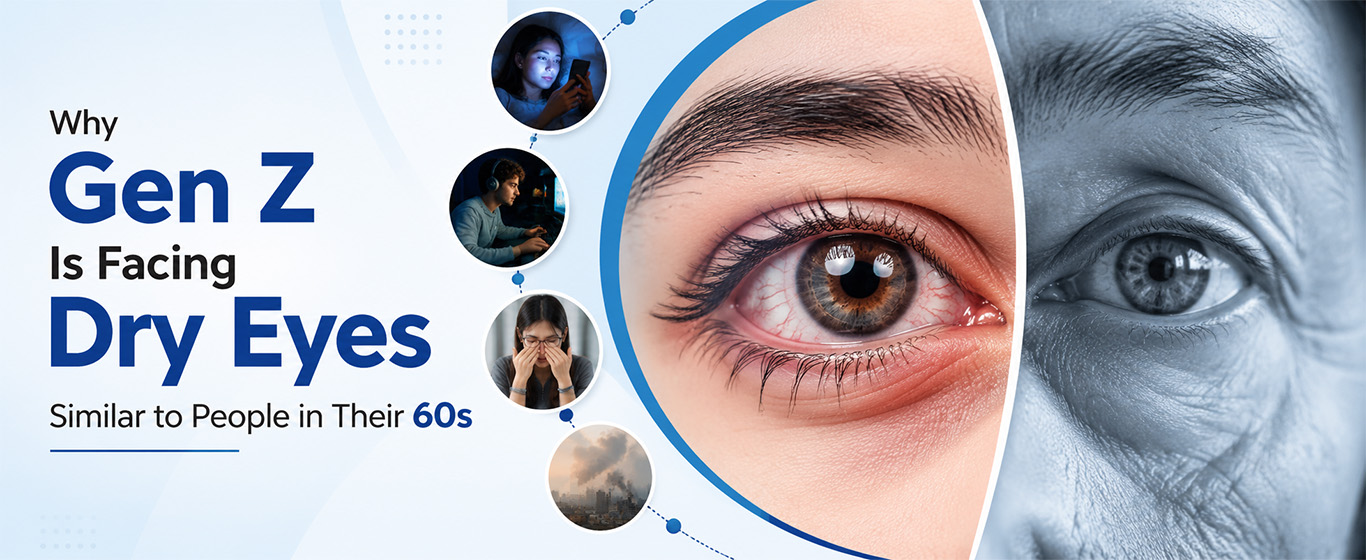
Dry eye disease used to be something doctors mostly saw in patients over 50 — a natural part of ageing, when tear glands slow down and hormonal shifts thin out the tear film. That’s not the pattern anymore. Walk into an eye clinic today, and you’ll find twenty-somethings with the same gritty, burning, “sandpaper” eyes their grandparents complain about — a clear sign of dry eyes in young adults. The eyes don’t lie about age. Something else is ageing them early. How Ayurveda helps fight such dry eye conditions can be understood by learning about “Ayurvedic treatment for dry eyes
The Numbers Are Not Easy to Ignore
- A study done in 2025 on young people aged 21–30 found something shocking — almost every person (99.3%) had signs of dry eye problems, even though they were young and didn’t have the usual age-related causes. This is one of the clearest examples of Gen Z dry eyes showing up in hard data.
- Another survey showed that 54% of Gen Z workers said their eye health is getting worse because of too much screen time. In comparison, only 49% of millennials, 39% of Gen X, and 31% of older people (baby boomers) reported the same problem- highlighting just how strongly screen time and dry eyes are linked for this generation.
At a gaming event, where young people used screens for long hours, 9 out of 10 people showed symptoms of dry eyes. Around 25% had very unstable tears, which is something usually seen in much older adults-a striking case of dry eyes from excessive screen time.
One more 2025 study found that more than 1 in 3 children (age 5–17) already have dry eye problems. The issue was highest in kids aged 10–14, and the biggest reason was daily screen use.
We could see an entire generation is developing the ocular symptoms of ageing decades ahead of schedule — not because their glands are wearing out but because of what they’re doing to their eyes every day.
Why Screens Age Your Eyes Faster Than Time Does
Two things happen when you stare at a screen for hours:
Your blink rate drops. A normal blink rate is around 15–20 times a minute. Concentrated screen use — scrolling, gaming, reading — can cut that by more than half. Fewer blinks means the oily layer of your tear film isn’t being spread and replenished as often, so tears evaporate faster than your eyes can replace them.
Your blinks become incomplete. Research using blink-tracking software found that screen users don’t just blink less — many blink partially, never fully closing the eyelid. That means the tear film’s oily layer isn’t being reset properly even during the blinks you do make. This partial-blink pattern is one of the lesser-known causes of dry eyes in young adults and a major driver of digital eye strain and dry eyes together.
In a 60-year-old, dry eye usually comes from glands naturally producing less oil and water over time. In a 22-year-old scrolling for six hours a day, the glands are fine — the behaviour is doing the damage that age would otherwise take decades to cause.
The Ayurvedic Lens: Why This Looks Like a Vata Problem
In Ayurveda, dryness, irregular movement, and depletion are all governed by Vata. Late nights, high stress, irregular sleep, excessive screen stimulation, and constant air-conditioning exposure are classic Vata aggravators — and they map almost exactly onto the modern Gen Z lifestyle: late-night scrolling, exam or work stress, AC-cooled rooms, and skipped meals.
This is why the fix isn’t just “blink more”. It’s addressing the underlying imbalance the same way Ayurvedic treatment approaches dry eye in any age group — restoring the oily layer of the tear film through therapies like Netra Tarpana; adjusting diet and sleep patterns; and rebuilding healthy blink and screen habits together, rather than only reaching for lubricating drops when the burning starts.
What Really Works — Starting Today
Follow the 20-20-20 rule — every 20 minutes, look at something 20 feet away for 20 seconds. Backed by multiple screen-time studies as one of the few habits shown to meaningfully reduce digital eye strain.
Blink consciously and fully every so often during long screen sessions — not just faster, but all the way closed.
Keep screens below eye level slightly, which naturally reduces how much eye surface is exposed to air.
Avoid direct AC airflow on your face while working — a major and underrated dryness trigger.
Try Trataka (steady-gaze practice) for a few minutes daily — an Ayurvedic eye exercise that supports blink stability and reduces screen fatigue.
See a doctor if symptoms persist beyond a couple of weeks of habit changes — early dry eye is easy to manage, but ignored dryness can affect the cornea over time.
Conclusion
Your eyes aren’t 60 years old. But the way most of Gen Z is using screens is producing the same tear-film breakdown that used to take decades of natural ageing. The good news: unlike actual ageing, this kind of damage is largely reversible with the right habits — and where it isn’t, Ayurvedic treatment offers a way to correct the underlying imbalance rather than just numbing the symptom.