
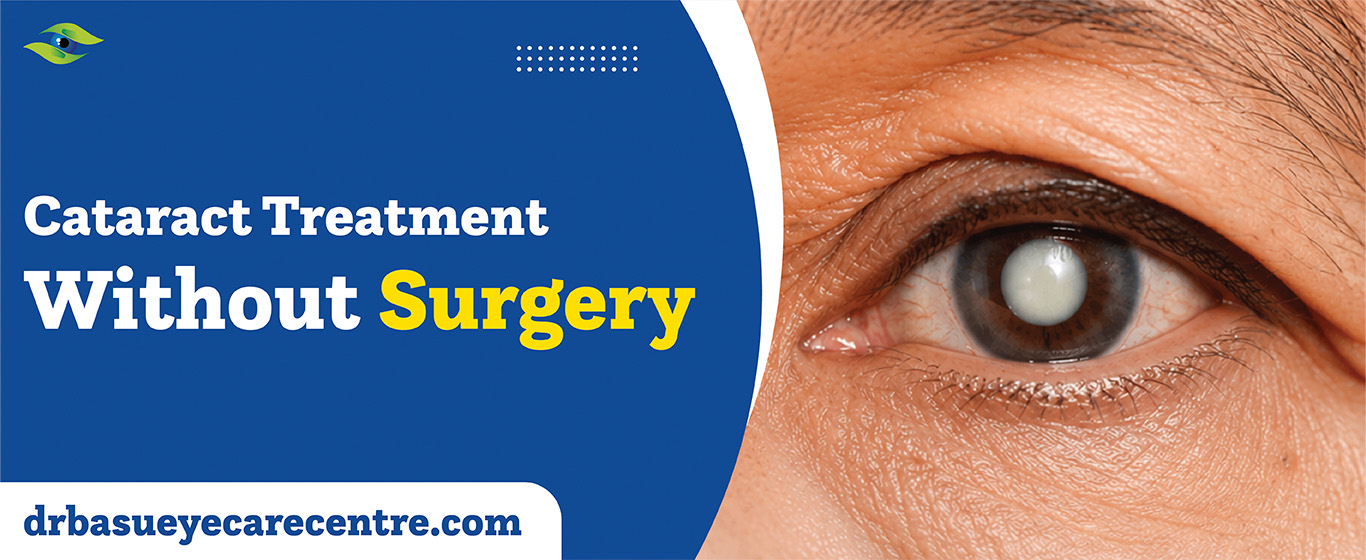
Cataracts happen when the natural lens of the eye gets clouded. This prevents light from passing through clearly and causes blurred vision. Dulled colours, difficulty while reading small print and increased light sensitivity are common.
Glare from headlights can make driving at night very tough. Among all, the ageing factor is the most prevalent cause, but eye injury, diabetes, smoking and long-term steroid usage can also play a part. In the early stages, symptoms can be subtle, but as the disease progresses, routine tasks become increasingly challenging. Surgery is the usual treatment which doctors recommend, but many opt for cataract treatment without surgery because of the evolving popularity and the trust Ayurveda has gained in recent times over the conventional medical treatment.
What Is a Cataract and Why Does It Affect Vision?
A cataract could be defined as clouding of the eye lens causing blurred vision—the clear structure behind the iris and pupil becomes cloudy. If light does not pass through cleanly, the eye’s lens becomes cloudy and fuzzy, causing vision to be blurry, foggy or dim.
Cataracts are mainly age-related but can also be caused by diabetes, chronic use of steroids, exposure to UV radiation, ocular injury or heredity. They are among the top causes of reversible blindness globally, affecting tens of millions of people—a number that increases each year as the world’s population ages.
Early Symptoms of Cataracts You Should Not Ignore
Be aware about the early symptoms of cataracts
Blurry or fuzzy vision – What was once clear may now be fuzzy or out of focus, no matter how many times you adjust your glasses.
Larger sensitivity to light and glare – Bright sunshine, headlights coming towards you or indoor lighting may seem uncomfortably intense or create halos around light sources.
Difficulty seeing at night – Low-light situations and nighttime become particularly tough, making it dangerous to drive after dark.
Colours may fade or yellow – colours may seem muted or less vibrant than they once were, as if you’re viewing them through a sepia filter.
Double vision in one eye – This is called ‘monocular diplopia’ and happens when light is scattered by the clouded lens and produces overlapping pictures.
Frequent changes in your eyeglass prescription If your prescription continues to change, even though your vision has been steady in the past, the cataract may be influencing the way light refracts in your eye.
Halo effect around lights A typical early sign is a characteristic ring or glow around lights — street lamps, candles, car headlights.
If you observe two or more of these symptoms, it’s time to see a professional for a full eye exam.
Can Cataracts Be Treated Without Surgery?
At Dr Basu Eye Care Centre, we say that if you see any of the early symptoms of cataracts which are impacting your vision, you should get your eyes immediately tested. If the cataract is in its immature stage (also called the ‘kacha’ stage in Ayurveda), the cataract could be easily treated with the right herbal medication and lifestyle changes prescribed by our Ayurvedic doctors.
1. Updated Prescription Eyeglasses or Contact Lenses
In the early stages of a cataract, opting for stronger bifocals, anti-glare lenses, or magnifying glasses can make everyday activities like reading, cooking, and using a phone much easier.
This is not a cure; it is management of symptoms. As the cataract worsens, your prescription will continue to change, and eventually glasses will no longer be adequate.
2. Lifestyle Modifications for Cataract Management
Certain everyday adjustments can reduce the impact of early cataracts on your daily life:
- Use brighter lighting inside, especially when reading
- Wear anti-reflective or polarized sunglasses outside to avoid glare
- Do not drive at night when visibility is most limited
- Use large print books or magnifying devices for near tasks
- Reduce screen brightness and enable night-mode settings on digital devices
These changes do not treat the cataract, but they help you function better while it is still in its early phase.
3. Nutritional Support and Diet for Eye Health
Several antioxidants have been studied for their potential role in slowing cataract development. While no diet can cure cataracts, nutritional choices can support overall eye health:
- Vitamin C and E — found in citrus fruits, berries, nuts, and seeds — may help combat oxidative stress in the lens
- Lutein and Zeaxanthin — present in leafy greens like spinach and kale — are associated with reduced risk of cataract progression
- Omega-3 fatty acids — found in fish, flaxseeds, and walnuts — support lens clarity and reduce inflammation
- Beta-carotene (Vitamin A) — found in carrots, sweet potatoes, and mangoes — is essential for retinal function
A well-balanced, antioxidant-rich diet is one of the most accessible nonsurgical strategies for supporting your eye health.
4. Protective Measures: Ultraviolet Protection and Quitting Smoking
Long-term exposure to ultraviolet (UV) radiation is an established risk factor for cataract. Even on cloudy days, while you are outdoors, wearing sunglasses that filter UV rays effectively can help protect the lens from UV-induced damage.
Another important risk factor is smoking. Smokers are about twice as likely to acquire cataracts as non-smokers. Quit smoking. Smoking is one of the most important lifestyle choices you can make to protect the long-term health of your eyes.
It is important to approach these with caution. None of these options are currently approved by mainstream medical regulatory bodies as definitive cataract treatments. Always consult a qualified ophthalmologist before trying any alternative therapy.
What is the stage of your cataract?
Our Ayurvedic experts will evaluate the stage of your cataract. According to Ayurveda, cataract progression happens in stages:
- Timira – Initial vision disturbance
- Kacha – Visible opacity in the lens (immature cataract stage)
- Linganasha – Advanced stage leading to severe vision loss
All this could be analyzed by checking the following aspects mentioned below
- Visual acuity – How much has the cataract reduced your best-corrected sight?
- Impact on everyday life – Are you having problems with driving, reading or work tasks?
- Ongoing disease – Any pre-existing diseases, such as diabetes, also need to be analysed.
What should you do to prevent cataracts?
Since there is no confirmed non-surgical cure, prevention remains your most powerful tool. Adopt these habits early:
- Annual comprehensive eye exams once a year
- Daily use of UV-protective sunglasses
- Consume diet rich in antioxidants and leafy greens
- Keeping blood sugar levels under control (especially for diabetics)
- Avoiding prolonged corticosteroid use unless medically necessary
- Not smoking — or quitting as soon as possible
Cataract treatment without surgery helps but has limits.
Cataract treatment without surgery is a realistic option only in the early stages of the condition. Prescription glasses, lifestyle adjustments, UV protection, and a nutritious diet can slow progression and manage symptoms for a time. Consulting an experienced ophthalmologist is the most important step you can take. Don’t wait until the fog becomes too thick to see through. Prioritise your eye health – because clear vision is not a luxury; it is a necessity.


